
What Makes Montessori-Inspired Memory Care Different?
Families exploring memory care in Kennewick, WA often want more than safety — they want purpose, dignity, and meaningful daily engagement for their loved one. Therefore, understanding what sets Montessori-inspired memory care apart can bring clarity and reassurance. Rather than focusing on decline, this approach emphasizes strengths, abilities, and personal history. As a result, residents experience structured support that promotes confidence, connection, and emotional well-being.
A Focus on Abilities, Not Limitations
First and foremost, Montessori-inspired memory care shifts the perspective from what a person has lost to what they can still do. Instead of emphasizing cognitive decline, caregivers intentionally identify remaining skills and interests.
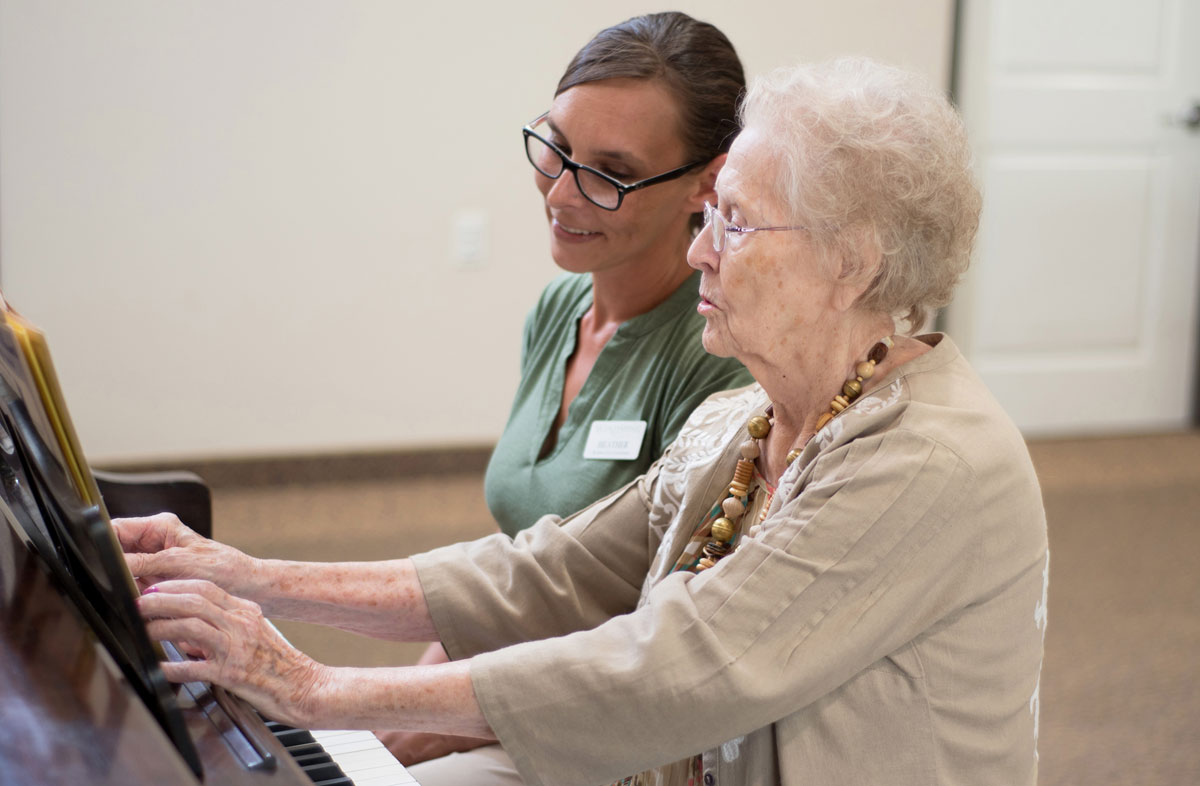
For example, a resident who once enjoyed gardening may help water plants. Similarly, someone who managed a household may assist in setting tables or organizing items. Because tasks are adapted to ability level, residents experience success rather than frustration. Consequently, confidence and self-worth are preserved.
Purposeful Engagement Throughout the Day
Unlike passive activity programming, Montessori-based dementia care incorporates purposeful roles into daily routines. Activities are not simply designed to “pass the time.” Instead, they are carefully structured to reflect familiar life experiences.
Furthermore, repetition and hands-on participation help reinforce cognitive pathways. Structured engagement reduces anxiety while promoting calm and focus. In turn, residents often show improved mood and decreased agitation.
In Kennewick memory care communities that utilize this approach, engagement becomes part of the environment — not just a scheduled event.
Structured, Supportive Environments
Another defining feature of Montessori-inspired memory care in Kennewick, WA is environmental design. Clear labels, visual cues, and organized spaces help reduce confusion and increase independence.
Because dementia affects processing and orientation, simplifying the environment allows residents to navigate more confidently. Additionally, predictable routines create a sense of stability. When daily life follows a consistent rhythm, anxiety decreases and comfort increases.
Structure does not mean restriction; rather, it provides freedom within safe boundaries.
Encouraging Independence with Guidance
Importantly, Montessori-inspired dementia care supports independence while ensuring safety. Caregivers offer guidance instead of taking over tasks unnecessarily. For instance, verbal cues or gentle prompts may be used before physical assistance.
As a result, residents remain active participants in their own care. This approach preserves dignity and reduces feelings of helplessness. Over time, maintaining small daily responsibilities can significantly enhance quality of life.
Reduced Behavioral Challenges
Because frustration often triggers behavioral changes, empowering residents can reduce agitation and resistance. When individuals feel purposeful and understood, anxiety frequently decreases.
Moreover, trained team members recognize how to redirect behaviors through engagement rather than confrontation. Instead of correcting mistakes, caregivers offer opportunities for success. Consequently, the overall environment becomes calmer and more supportive.
Strengthening Emotional Connection
Montessori-inspired memory care also prioritizes relationship-centered support. Staff members take time to learn each resident’s life story, preferences, and past roles.
By honoring personal history, caregivers create meaningful interactions that foster belonging. Additionally, families are encouraged to share insights that enhance individualized care plans. This collaborative approach strengthens trust and consistency.
Why Montessori-Inspired Memory Care Matters in Kennewick, WA
Families in the Tri-Cities region often seek memory care that goes beyond basic supervision. Therefore, Montessori-inspired programming offers a thoughtful alternative. Instead of defining residents by diagnosis, this philosophy recognizes identity, ability, and purpose.
Furthermore, structured routines, purposeful activities, and trained guidance combine to create an environment rooted in dignity. While safety remains essential, emotional well-being is equally prioritized.
Ultimately, Montessori-inspired memory care in Kennewick, WA provides a balanced approach — one that supports independence while ensuring compassionate, secure dementia care.
Is This Approach Right for Your Loved One?
If your loved one is experiencing memory loss, confusion, or behavioral changes, exploring Montessori-based memory care may provide clarity. Scheduling a memory care assessment allows families to understand current needs and future planning options.
Early exploration helps ensure smoother transitions and stronger outcomes. Most importantly, it allows families to choose care aligned with their values.